
Everything You Need to Know About Surgical Robots
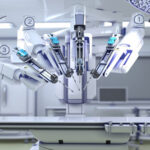
Surgery is undergoing a revolution: mechanical assistants for surgeons are making life easier for patients thanks to their unique capabilities.
Interview with Professor Ofer Yosipovich, head of the urology department at Ichilov Medical Center in Tel Aviv.
In recent years, operating rooms have received a technological twist reminiscent of scenes from science fiction movies. With metal arms, tiny cameras, and experienced surgeons controlling the process from behind screens, surgical robots have become stars of the medical world. "It's like driving a surgical supercar," says Professor Ofer Yosipovich. "The robot allows me to do things that were previously impossible."
Here’s what you need to know about surgical robots that are taking over operating rooms in Israel and around the world, making life easier for surgeons and patients.
Hospitals are being equipped with an increasing number of surgical robots
Medical centers around the world, including in Israel, are actively investing in advanced medical robots. One of the most popular is the da Vinci robot from Intuitive Surgical, which allows for highly precise surgeries. Recently, Medtronic introduced its Hugo robot.
Ichilov Medical Center is one of the leading hospitals in the use of robotic technologies. "Today, robots are present in almost all hospitals, and we have the most of them," says Professor Yosipovich. "These investments pay off due to the precision and efficiency of robots in complex surgeries." Investments in medical robots allow hospitals to offer patients advanced solutions and improve medical outcomes.
The robot is suitable for complex surgeries
Surgical robots are used for procedures that require high precision and access to delicate areas of the body. In urology, they are used for prostate cancer surgeries, bladder surgeries, and kidney surgeries.
Robotic technologies are also widely used in general surgery, gynecology, thoracic surgery, esophageal surgery, liver surgery, colon surgery, lung surgery, and pelvic floor surgery. "Technologies continue to evolve, and robots will become important tools for surgeons," says Professor Yosipovich. "They will enhance the precision and safety of surgeries, allowing for previously impossible complex treatment methods."
Cuts, photographs, and stitches with the precision of a senior surgeon
Robotic technologies combine human skill and advanced technology, allowing surgeons to perform surgeries at the highest level. The hands of the da Vinci and Hugo robots perform precise operations, translating the surgeon's movements inside the patient's body. This allows for small incisions, suturing, and effective use of instruments.
"The robot's hands move according to my movements, allowing for photography and suturing with high precision, as if I were performing the actions myself," explains Professor Yosipovich. "This mechanical process is complex, but it allows me to maintain freedom of movement."
Robotic surgeries require less recovery time
Robotic surgeries are not only more precise but also allow patients to recover faster. Thanks to smaller incisions, less blood loss, and fewer postoperative pains, patients can return to normal life more quickly. Robots also reduce hospital stay times and the likelihood of infections.
"For example, with robotic-assisted prostatectomy using the da Vinci robot, patients can return to daily activities within a few days instead of weeks," emphasizes Professor Yosipovich. "In gynecological surgeries, such as hysterectomy, the use of robots reduces recovery time and decreases the number of complications."