
Triglycerides Directly Linked to Abdominal Aortic Aneurysm
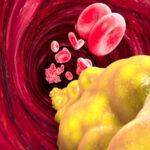
Researchers from the University of Michigan Medical School published sensational data in the journal Circulation that changes the understanding of the causes and mechanisms of abdominal aortic aneurysm (AAA). For a long time, triglycerides were considered just one of the markers of vascular problems. However, new research has shown that they play a direct pathogenic role, causing the development, growth, and rupture of aneurysms.
Why This Discovery is Important
An abdominal aortic aneurysm is a dangerous condition in which the wall of the body's main vessel stretches and thins. When it ruptures, massive internal bleeding occurs, with a mortality rate of up to 90%. For a long time, doctors focused on controlling blood pressure and cholesterol levels, underestimating the significance of triglycerides.
The work of researchers from Michigan showed that triglyceride-rich lipoproteins and proteins regulating their metabolism, particularly APOC3 and ANGPTL3, do not merely accompany the disease but act as its direct catalysts.
Experiments on Three Models
The team used three different mouse models of hypertriglyceridemia. The results were unequivocal:
- moderate increases in triglycerides accelerated the formation of aneurysms;
- higher levels led to aortic dissection;
- extreme levels caused complications similar to vessel rupture.
The researchers also found that an excess of triglycerides and fatty acids, especially palmitate, disrupts the function of lysyl oxidase (LOX) – an enzyme responsible for the strength of the connective tissue of the aorta. Without it, the vessel wall loses stability, accelerating disease progression.
Interestingly, the overexpression of LOX in mice completely blocked the harmful effects of triglycerides, confirming the key role of this mechanism.
New Therapy Instead of Old Approaches
Traditional lipid-lowering drugs, such as niacin, failed to reduce triglycerides to a protective level. However, in experimental therapy, the researchers used antisense oligonucleotides that block ANGPTL3 – a protein produced by the liver involved in fat metabolism.
The results exceeded expectations: triglyceride levels decreased by 50%, and the development and dissection of aneurysms were prevented in all models. This opens the prospect of creating drugs that can prevent the disease without the need for surgical intervention.
Expert Opinions and Prospects
Professor Eugene Chen, one of the authors of the study, emphasized that hypertriglyceridemia can now be considered a primary therapeutic target for the prevention and treatment of AAA. Co-author of the study, Yanhong Guo, called the results a "potential paradigm shift" in vascular medicine.
If the data is confirmed in clinical trials, doctors will be able to prescribe medications aimed at lowering triglycerides to patients in high-risk groups. This is especially important for those who cannot undergo surgery due to health conditions.
This discovery not only provides a new perspective on abdominal aortic aneurysm but also raises the question of the need for more careful monitoring of triglycerides in preventive examinations. It is possible that in the coming years, a fundamentally new approach to treating one of the most dangerous vascular diseases will emerge.