
Scarless Cesarean Section: A New Method Introduced in Israel
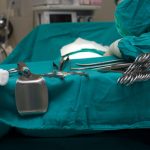
At the 'Liss' maternity hospital of the Ichilov Medical Center, a new technology for closing wounds after cesarean section surgery has been applied for the first time in Israel. It is based on the use of dissolvable medical staples that, by connecting the edges of the skin from the inside, minimize the risk of postoperative complications and provide an excellent cosmetic effect, making the scar almost invisible.
Currently, one in four births in Israel is performed via cesarean section. It is used exclusively for medical indications – when there is a potential threat to the life and health of the mother or child. Until recently, either metal staples or thin dissolvable threads were used for suturing the postoperative wound.
Closing the skin with surgical staples, which are nickel or titanium plates, is considered a quick and easy way to close a wound. A special medical stapler is used for this, which is not much different from an office stapler, except for its sterility. Among the advantages of the method, in addition to the high speed of closing the postoperative wound, is the absence of transverse stripes on the skin during healing, as well as the ability to quickly remove the staple in case of infection. However, metal staples have their drawbacks – they can cause pain and discomfort, and after removal, they leave a noticeable scar.
Suturing the edges of the skin with dissolvable medical threads allows for a good closure of the wound and does not require subsequent removal of stitches, as the material dissolves on its own over time, leaving no trace. On the other hand, compared to metal staples, the surgeon spends more time suturing, the procedure is more painful, and importantly, due to multiple needle punctures, the risk of infection and bleeding from the postoperative wound increases.
 The new method of closing wounds, which involves the use of dissolvable staples, according to specialists from the Ichilov Medical Complex, combines the advantages of previous methods while being free of their disadvantages. These staples are made from synthetic dissolvable sterile suture material and dissolve on their own within three months under the influence of the immune system. They are attached – just like metal ones – using a medical stapler.
Dissolvable surgical staples allow for record-short closure times of the postoperative wound without wasting precious time, do not require subsequent removal like metal ones, are less painful for the patient, and importantly, especially for women, leave no noticeable scars after use.
As clarified by Dr. Sharon Maslovitz, head of the emergency department at the 'Liss' maternity hospital, the appearance of postoperative scars and the extent of scarring largely depend on the individual characteristics of the patient's body and the number of previous surgeries she has undergone. However, overall, he states that using dissolvable staples for wound closure provides a more aesthetic result compared to metal ones. After full recovery, a woman will be able to take a shower in the usual way, without the need for special soaps and ointments.
Experts note that there is only one contraindication for the use of dissolvable staples – a large number of scars from previous surgeries. In this case, it is more appropriate to use metal staples.