
The World's First Case of Robotic Removal of a Pregnancy Developing in the Liver
An ultrasound examination of a 30-year-old woman in early pregnancy shocked even experienced doctors when it was discovered that the fetus was located in the liver. The pregnancy was terminated due to a threat to the woman's life. Only 20 such cases have been documented in the global medical literature. Dr. Gadi Sabah, Deputy Head of the Obstetrics and Gynecology Department at Rabin Medical Center, noted: "Even after 30 years of work, I encounter diagnoses I have never heard of."
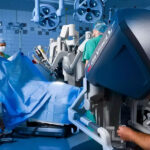
In the Ministry of Health and among specialists, a similar case is not known in Israel. Due to the threat to life, the pregnancy was terminated within 48 hours. It should be noted that the procedure for terminating the pregnancy was performed using the Da Vinci robot, making it the world's first robot-assisted surgical intervention for the removal of an ectopic pregnancy that developed in the liver.
"The main difficulty here was the diagnosis because we knew that the pregnancy existed, that the fetus was alive and developing, but several times we could not determine its location," says Dr. Gadi Sabah. "I am the most experienced doctor in the department, and I am truly shocked. Even after 30 years, you encounter diagnoses you have never heard of."
According to Sabah, there is no information about pregnancy in the liver in existing publications in Israel. "In 30 years of work, I have never heard from colleagues about a pregnancy developing in the liver. Most ectopic pregnancies occur in the fallopian tubes, sometimes in the ovary or cervix. More rare cases are abdominal pregnancies. Most of these pregnancies occur in the abdominal cavity, most often on the serous membrane of the peritoneum or tissues supplying blood to the intestines. Pregnancies in the liver are extremely rare cases."
After four ultrasound examinations, the location of the pregnancy could not be established. Only a CT scan revealed a suspicious formation in the liver, which was then confirmed as a fetus at eight weeks of pregnancy. "There is no risk group for this type of pregnancy, but the only explanation is that the liver is an organ rich in blood vessels, which allowed the pregnancy to develop in this abnormal location," adds Dr. Sabah.
Not only Dr. Sabah was shocked by the rarity of the case. Professor Eran Sadot, head of the liver, bile ducts, and pancreas surgery department, noted that this is one of the most complex cases in practice. "Only 20 such cases have been documented in the global medical literature, and each of them is unique," he added. The danger of such a condition lies in the fact that with a pregnancy in the liver, there is a risk of rupture, which can lead to fatal consequences.
"In such cases, there is no alternative," noted Professor Sadot. "Ectopic pregnancy always poses a threat to life due to the risk of severe bleeding, especially in the liver, where large vessels are present. The risks of bleeding in such an organ are much higher, making the operation extremely complex and dangerous." He also emphasized that thanks to the Da Vinci robotic system, the operation was performed with maximum precision, significantly reducing the risks. This is the world's first case of using a robot to remove an ectopic pregnancy in the liver, and Professor Sadot proved that even such complex operations are within his skill and professionalism.